The Hundred Year Old man who climbed out of a window and disappeared by Jonas Jonasson

Perhaps another title could be "A History of the 20th century", for the central character, Allan Karlsson, seems to have been in on some of the pivotal moments of the 20th century and indeed, met the key players of the 20th Century (at least, through Swedish eyes).

The story is well told and does end happily ever after. It is funny, often unbelievable as a group of the most unlikely characters gather around Allan on his adventures. The story tells the life of Allan born in 1905 as well as the story of what happens after Allan climbs out of the window.


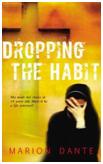
Dropping the Habit by Marion Dante

“Have you read…” began the conversation and a frisson of excitement briefly took form as we discussed the merits (or otherwise) of a book written by a former Salesian nun. This was our annual get together for the class of 1970 of the former St John Bosco’s Convent Grammar School, Chertsey. It was not often that our former Alma Mater makes it into a published work. Would we recognise any of the people mentioned, would we even find ourselves in the pages of the book, and would it shed light on the lives of the women who educated us? And what scandals would be unveiled along the way?

And so I acquired the book on my eReader. The beginning started well enough, with the reminisces of a young Marion Dante in Ireland. There must be a guide somewhere that authors use for recreating the thoughtscape of a young child. The simple language and the half understanding of what is happening. Which is strange, because children, when they write, do not use this language.

As the book wore on, once I had got past Marion’s stay at the Sandgates convent in Chertsey, the book began to pall. There were points of interest, the lives of the nuns and the aspirants for instance and the changes wrought by Vatican II.

Undoubtedly, Marion’s life as nun was hard. And yes, the Church does have some hang ups about sex. The Manichean Heresy is not dead, even after 1700 years. Bodies are bad and sex is even worse. Only the spiritual world is good. But we live in our bodies and in Marion’s story is the suffering that results in such a negative view of the world.

However, I lost interest. The life of Marion drones on. Marion has a difficult childhood (her mother is chronically depressed – post natal depression?), the family is poor. Marion becomes a nun (to escape?). Marion has a breakdown and eventually leaves the order. And in her state of depression she fails to see she is not alone, for she has the remarkable gift of always finding a friend or two to help her, to give shelter and advice. So I ask, is this a story about a woman maltreated by a religious order or is it a story of a woman whose life is blighted by mental illness – first her mother’s and then her own breakdown.

The Lewis Man by Peter May

This was one of those 20p books from Amazon. Book 2 of a trilogy. Except that it did not feel like a part work.
The setting is the isles of Harris and Lewis where a perfectly preserved corpse, pickled in the bog is found. The story unfolds. Fin McLeod is returning to his roots after the death of his son and the breakdown of his marriage

It is an enjoyable read – the Hebrides really play the central role in this book. And so does Alzeimers. How do you get into the head of someone with dementia? Peter May gives us an insight.

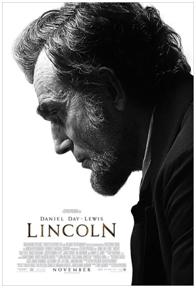
Lincoln – the film

Last night we went to the film Lincoln, starring Daniel Day Lewis. This was an extremely enjoyable film and certainly made one think. The year is 1865 and Lincoln, like Barak Obama, has just been elected for a second term.

So much of the film is familiar. Congress holds the president to ransom; the forces of conservatism are pitched against the forces of “radicalism”, or liberalism. The film covers Lincoln’s last months as he stands on the threshold of history. The thirteenth amendment to the constitution was to abolish slavery in the United States. Other amendments were added later, building on this, the most radical of all amendments to the constitution. The most surprising this about this film is the fact that Lincoln was a republican and it was the Republican party that was most in favour of the abolition of slavery, the Democrats were opposed. And yet, nearly 100 years later, it is a Democrat president, John F Kennedy who finally brings full civil rights to Black Americans and finally, the first black president is also a Democrat. How things change over time.

At the crucial vote to pass the Thirteenth amendment, the speaker elects to cast his vote, for as he says, history is being made. Now, it is impossible to imagine a world where the United States had not legislated against slavery.

The film does no favours to the American political system. Then as now, the system is open the bribery and corruption – then as now the votes of Congressmen can be bought. And the film certainly does no favours to those who are on the religious right. How can anyone say that slavery is ordained by God? And yet the religious right did.

Multiculturalism: the biggest mistake

Should we abandon multiculturalism for the sake of unity in this country?

There is a misunderstanding that culture and religion are the same. This misunderstanding came to the fore when the subject of Christmas trees was discussed in the office where I work. One member of staff is a devout Muslim and some thought that he would find it offensive if the office Christmas tree was placed too close to his desk. This is all very well, but there is nothing in the Koran about Christmas trees. And I would suggest, there is nothing in the Haddith so beloved by some Muslim clerics to forbid Christmas trees. And yet this man has been convinced that a Christmas tree is as forbidden as alcohol or pork. Why? There is this mistaken conviction by some that the humble Christmas tree is a religious symbol, despite the fact that there is no mention at all about Christmas trees in the Bible.

So what is going on here? The Christmas tree is not a religious symbol. It is not like the Crib that my family place on the mantelpiece every Christmas, nor is it like a Crucifix. For centuries, for almost two millennia, the Church has celebrated Christmas in this country without the Christmas tree. The Christmas tree belongs to the culture of this country, and is no more religious that the giving of gifts at Christmas, eating turkey and putting up decorations. The midwinter festival celebrated in this country is called Christmas and comes with a variety of rituals (many of which only date back to the reign of Victoria and Albert). As such, stripped of any religious overtones, it is a festival open to all, regardless of religion. It is sad to see that the mad mullahs in this country are so determined to prevent their co-religionists from joining in the celebrations.

And now we come to the issue of multi-culturalism. Culture and religion are not the same. It is right to allow people to worship their God in whatever way they think is appropriate. But we have to be very careful about confusing the demands of culture and the demands of religion. At stake is the future of this country as a tolerant and inclusive society. To continue to be such, there has to be one culture and one law that everyone subscribes to, that embraces all people regardless of religious perspective. But we have to be clear just what is our culture.

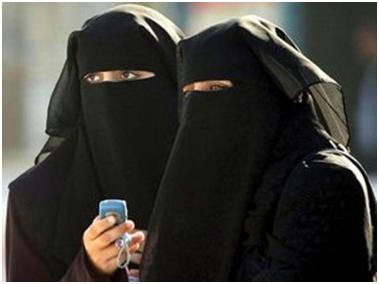
Our culture is based on monogamy, as practised by the Romans, the Greeks and the Jews. We place great emphasis on face to face encounters, so much so, that there is a linguistic record to show the importance. Face to face, to show ones face, bare-faced cheek, lose face, save face… The covering up of women’s face, just because they are women’s faces is totally alien to our culture. Our culture allow both men and women to be proactive in finding a partner. We have a respect for equality, each step along the road to full equality has been a difficult one, the equality of races, equality of women and now equality of people who are gay. We are tolerant of others, even if there values are different from ours – and we celebrate Christmas. The only time that Christmas was not celebrated in England was when Oliver Cromwell was in power. A miserable few years for the English people. And we have one law for all.

An example is abortion. Any woman has access to abortion regardless of religion. The law does not discriminate against those whose religion bans abortion. Civil partnerships (and later marriage) are available to all regardless of religious persuasion. Adultery is not illegal. But because these things are permitted by law, the religious devotee can live to a stricter moral code. The Catholic Church forbids divorce, but there is a court system set up within the Church to examine cases of marriage breakdown and the marriage may be annulled. This is an optional add-on for Catholics and does not replace the law of the land. Shariah law can be a useful addition to the life of the faithful but must never be seen as a replacement for our law, but only as a way of maintain relationships and faith within the Mosque community.

Multiculturalism is wrong, for it fragments the wider community so that common experiences cannot be shared and as the Jews in parts of Europe found, living as a separate culture makes it easier for the pogroms that were mounted against the Jews in the 19th and 20th centuries. As a society we have a right to be able to decide what is acceptable and what is not acceptable both in terms of behaviour and dress.


Father Brown by G K Chesterton

I read the Fr Brown stories many, many years ago, so long ago that the details of the stories have been lost. It was a pleasant surprise to find that some of the Father Brown stories had been adapted for the small screen. Unfortunately, the BBC made two rather bizarre decisions about this series. First, a brand new series was consigned to mid afternoon viewing. What, do the BBC really not consider those of us who work? And the second was that all 10 episodes should be shown over two weeks. So even is you want to watch on iPlayer, you have very little time in which to do this.

Having said all this, the series was extremely watchable. Fr Brown has been moved from post WW1 to post WW2. Fr Brown is now a priest in a piece of England that I cannot recognise – Catholic parishes in England have an assortment of parish churches – some are Victorian, but most hail from the 1920’s onwards. Fr Brown’s parish church would not have been out of place in a series about an Anglican priest, but the Catholic Church in this country does not have pre-reformation churches in its estate. When John Henry Newman crossed the divide, he did not bring any real estate with him. And in the 1950’s, the Catholic Church was not quite as mainstream as the series portrays. But these are minor things. And of course, the careful viewer will note that the stories are “based on”. This give licence for all sorts of changes – the English Inspector Valentine is in the original, Inspector Valentin a leading French policeman who comes to England to apprehend the daring thief Flambeau.

These changes can be ignored, for what the BBC produced was an extremely nostalgic trip back to the 1950’s and an England long gone. The pleasant English village is not a safe place, rather like Midsomer and the world of Miss Marple where death comes calling with monotonous regularity. Despite that, it is a safe world where materialism has not caught hold and neighbours talk to neighbours.

I have now watched all ten episodes – but alas I had to watch them bunched together. However enjoyable the series, this was indigestible, so come on BBC – please can FR Brown be spread out a bit more. And now, I am reading the originals again.

How many recipes?

According to the Waitrose magazine, Waitrose Kitchen (January 2013), the average Brit knows 10 recipes off by heart. Which I suppose is not too bad. Take my husband. He can make porridge, omelette, boil potatoes for 20 minutes and make toast. And follow the instructions of ready meals. In the days when we ate beef burgers, he could cook beef burgers as well.

The problem with such a statistic is that it does not define what is a recipe. Is beans on toast a recipe? Does this include cakes and scones? Does this include using ready made sauces and puff pastry? Does it include variations on a theme?

From what I can see, there are some basic cooking techniques. Recipes are these techniques with different ingredient lists. Risotto for instance. The survey claims that 3 out of 10 people can make a risotto. Actually, I use a pressure cooker for this – saves the standing around and the end result is good. But you can make mushroom risotto, asparagus risotto, chicken risotto – different recipes?

I make several types of cake – one basic recipe (a Victoria sponge recipe). I make soup – the ingredients are the different, but the method the same. I make stew – one method and different ingredients.

The Life of Pi by Yann Martel (film)

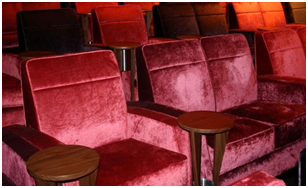
We went to see this on New Years Day at the recently revamped cinema in Walton. Gone were the traditional cinema seats, and the cramped feel that all cinemas seem to have. Instead we were treated to a 2 seater sofa, masses of leg room and small tables on which to place your drinks. Very civilised.

We chose to see the 3D version of the film, which means that you have to wear some rather unflattering glasses (which do fit over your own spectacles). So armed with a cup of coffee and the 3d specs we settled down to see the film.

And the film. The 3D effects were great. Were they essential to the film? No, not really. Like any film, it is the story which is important.

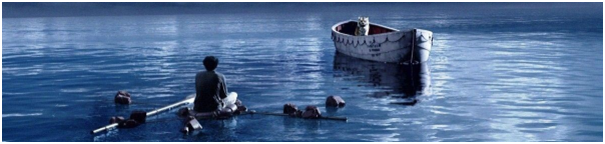
The story covers the life of a boy called by Pi growing up in India. His parents ran a zoo

Martel asks important questions in this film. In the beginning, as Pi’s early life story is told, is the question of religion and the fragmentation of religion and religion’s relationship to the belief in God. At the end, another question is asked, which story do you prefer, the fantastic fable of a boy shipwrecked, in a lifeboat with only a tiger for companionship or a more realistic story of a boy alone in the lifeboat. As Pi points out, neither story answers the question “Why did the ship sink?”. So it is easy to miss the real questions that Martel is asking, questions to do with truth. How do we know what is true and what is not true. Sometimes we confuse the question of truth with what is real, or reality. However reality, when totally deconstructed is a bunch of sun atomic particles that sometime sexist and sometimes do not, sometimes they are here and sometimes somewhere else – with lots of space in between. Reality is not what I can see and feel and touch, for the particles that I can touch today may be somewhere else tomorrow and may even be part of the system that I call me. What is truth? Pi tells the Japanese investigators at the end of the book (and film) two stories. Can they both be true? The second story is unpalatable, for it deals with the rawness of survival and shatters the picture we have of Pi, a gentle and dreaming 17 year old boy, a boy who kills so that he will survive (and not be eaten). The stark facts of the second story do not necessarily contradict the first story. Are the two not different ways of telling the story of a boy who survives the destruction of his family and is cast adrift for 227 days alone in a small boat. And despite this, Pi survives, physically, psychologically and emotionally. And so it is with God. And a question of faith. Which story of creation do you prefer? The hard bald facts, or a creation story told by the world’s great religions. Are the great religions that Pi meets in India, Christianity, Islam and Hinduism not just different stories told about the same God?